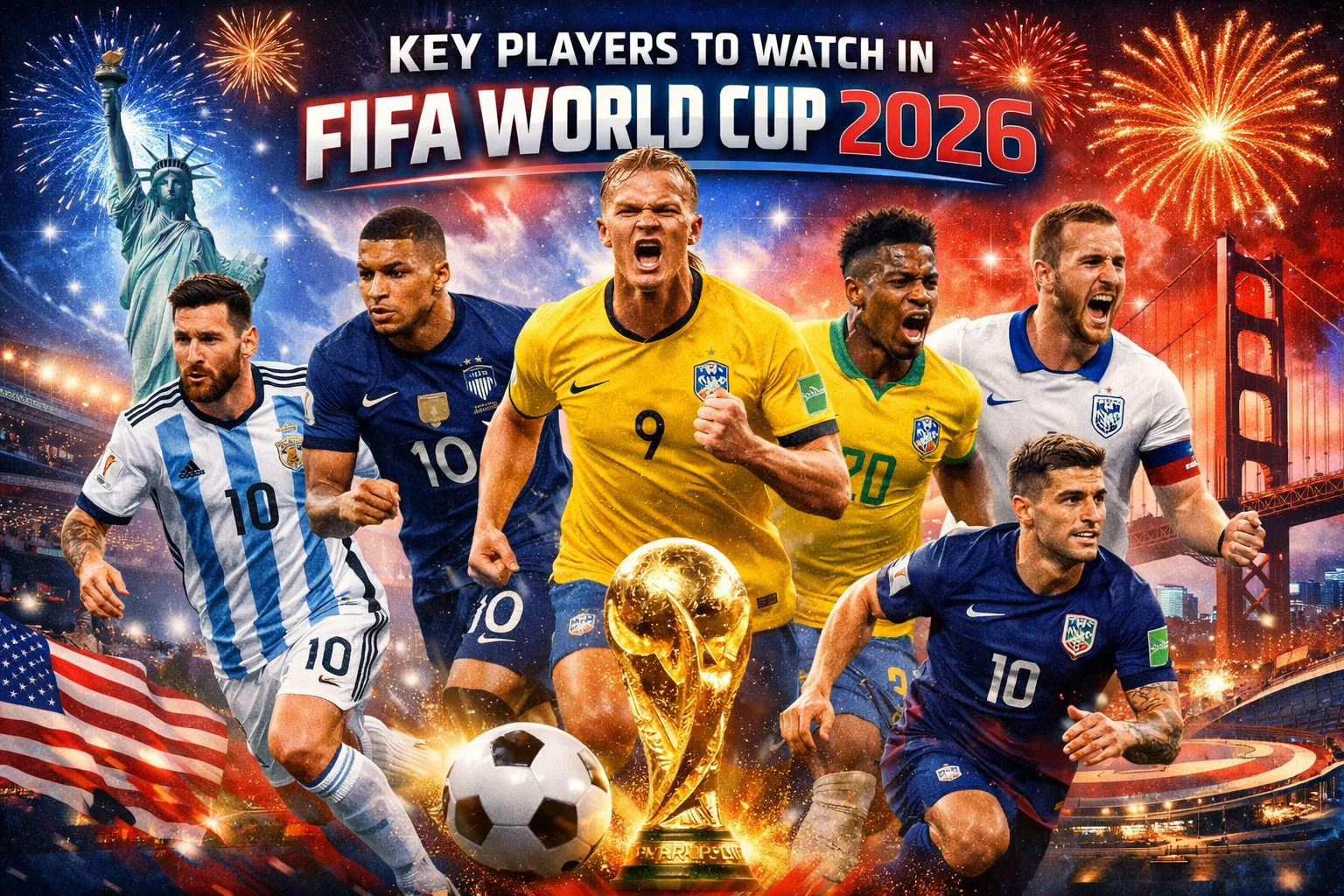
Key Players to Watch in FIFA World Cup 2026
The 2026 FIFA World Cup is set to be the biggest tournament in football history, featuring 48 teams competing across the United States, Canada, and Mexico. This expanded format means more matches, more nations, and a greater spotlight on individual brilliance. With games spread across multiple cities and climates, adaptability and squad depth will play a crucial role but standout players will still be the ultimate difference-makers.
Modern football has evolved into a fast-paced, tactically complex game where individual quality can decide tight matches. Whether it’s a clinical finisher, a creative playmaker, or a commanding defender, key players often determine a team’s success. In high-pressure tournaments like the World Cup, moments of magic from top stars can define entire campaigns, turning contenders into champions.
This guide highlights the most important players to watch in the 2026 World Cup, from global superstars and rising talents to potential breakout performers. It provides insights into their playing styles, current form, and expected impact on the tournament, helping fans understand who could dominate the world stage.
Criteria for Selecting Key Players
Recent Club and International Performance
A player’s current form is one of the strongest indicators of how they will perform at the World Cup. Consistent performances in top leagues and international competitions show readiness for high-pressure matches. Players who are delivering goals, assists, clean sheets, or standout performances for their clubs and national teams are more likely to carry that momentum into the tournament.
Age and Career Stage
The balance between youth and experience is crucial. Players in their peak years often combine physical ability with tactical intelligence, while younger players bring energy, fearlessness, and unpredictability. At the same time, experienced veterans provide leadership and composure, especially in knockout stages.
Role in National Team Tactics
Not all great players have the same influence within their national teams. Some are the focal point of the attack, while others control the tempo from midfield or anchor the defense. Players who are central to their team’s tactical system and game plan are more likely to make a significant impact.
Consistency and Fitness Levels
Fitness and availability are key factors in a long tournament. Players who maintain high performance levels throughout the season and avoid injuries have a clear advantage. Consistency ensures they can deliver across multiple matches rather than just in isolated moments.
Big Match Experience
World Cup success often depends on how players handle pressure. Those who have performed in major tournaments such as continental championships or high-stakes club competitions bring valuable experience. Their ability to stay calm and deliver in crucial moments makes them players to watch closely.
Kylian Mbappé
Kylian Mbappé is France’s primary attacking threat and one of the most explosive forwards in world football. His pace allows him to break defensive lines effortlessly, while his dribbling and finishing make him deadly in one-on-one situations. Beyond scoring, Mbappé’s movement creates space for teammates, and his ability to track back helps France maintain balance in transitions. In World Cup 2026, he is expected to lead the team’s attack, produce key goals, and deliver decisive moments in knockout matches.
Erling Haaland
Erling Haaland is Norway’s focal point in attack, combining physical strength with clinical finishing. He dominates in the air, exploits defensive weaknesses, and consistently converts chances into goals. Haaland also acts as a pivot for Norway’s offensive structure, drawing defenders and creating openings for wingers and midfield runners. Watching how he adapts against top defenses will be crucial to Norway’s success in 2026.
Kevin De Bruyne
Kevin De Bruyne is Belgium’s creative mastermind, dictating the tempo and linking midfield with attack. His passing vision, ability to find teammates in tight spaces, and knack for scoring from distance make him indispensable. De Bruyne’s tactical intelligence also helps Belgium maintain shape and control games. In 2026, he will likely be the driving force behind Belgium’s chances, orchestrating attacks and creating scoring opportunities.
Harry Kane
Harry Kane is both a reliable goalscorer and a deep-lying playmaker for England. He combines intelligent movement with finishing prowess, often dropping into midfield to connect play while remaining a threat in the box. Kane’s leadership and ability to organize England’s attack make him a central figure to watch. His performance in critical moments could determine England’s progression in the tournament.
Neymar Jr.
Neymar Jr. serves Brazil as both a creator and a finisher. His dribbling, vision, and flair allow him to unlock defenses, provide assists, and score spectacular goals. Neymar also contributes defensively, pressing opponents and supporting transitions. Maintaining fitness and avoiding injury will be key for him to influence matches and produce moments of brilliance in World Cup 2026.
Lionel Messi
If Lionel Messi participates in 2026, he will function as Argentina’s playmaker and leader. Messi’s ability to read the game, dribble past multiple defenders, and finish with precision makes him a constant threat. He also provides guidance and leadership to younger players, helping Argentina maintain composure in high-pressure situations. Watching how he balances creativity and goal-scoring will be essential.
Cristiano Ronaldo
Cristiano Ronaldo, if still competing internationally, would bring experience, goal-scoring ability, and leadership to Portugal. His positioning, aerial threat, and finishing skills remain exceptional, and he often inspires teammates in critical moments. Ronaldo’s ability to change a game with a single play makes him a player to watch for decisive moments in 2026.
Jude Bellingham
Jude Bellingham is England’s midfield dynamo, combining energy, tactical intelligence, and versatility. He contributes defensively with tackles and pressing, while also driving attacks forward with passing and dribbling. Bellingham’s composure in big matches at a young age makes him a rising star to watch closely in the tournament.
Vinícius Jr.
Vinícius Jr. brings Brazil pace, creativity, and unpredictability on the wings. His dribbling and acceleration can break through tight defenses, and he often draws multiple defenders, creating space for teammates. Vinícius’s flair and ability to score crucial goals make him one of the most exciting young talents in World Cup 2026.
Thibaut Courtois
Thibaut Courtois is Belgium’s first-choice goalkeeper, known for his shot-stopping ability and command of the penalty area. He is particularly effective in high-pressure situations, making key saves in critical matches. Courtois’s composure and distribution also help Belgium build attacks from the back, making him a crucial player to watch.
Gianluigi Donnarumma
Gianluigi Donnarumma combines youth and experience for Italy, excelling in reflex saves and penalty situations. His presence gives Italy confidence at the back, and his ability to organize the defense ensures stability throughout the tournament. Watching Donnarumma’s performance could be decisive for Italy in knockout rounds.
Jamal Musiala
Jamal Musiala is Germany’s dynamic attacking midfielder, capable of creating chances and breaking defensive lines with his dribbling and agility. He thrives in tight spaces, linking play between midfield and forwards while also scoring goals himself. Musiala’s vision and technical skill make him a player to watch, as he can change the outcome of matches with moments of brilliance.
Pedri
Pedri serves as Spain’s midfield engine, controlling tempo and connecting defense to attack. His precise passing, spatial awareness, and ability to retain possession under pressure make him vital to Spain’s strategy. Pedri also contributes defensively, pressing opponents and supporting transitions. His combination of creativity and work rate ensures he will play a key role in 2026.
Bukayo Saka
Bukayo Saka offers England versatility and consistency on the wing. He can stretch defenses with pace, deliver dangerous crosses, and cut inside to score goals. Saka’s intelligence and decision-making allow him to exploit weaknesses, making him a constant threat. His role in England’s attack will be central to their World Cup ambitions.
Rodrygo
Rodrygo is another key Brazilian winger, combining speed, technical skill, and goal-scoring ability. He often drifts into dangerous positions, providing finishing options and creating space for teammates. Rodrygo’s composure in one-on-one situations and his ability to execute in high-pressure moments make him a rising star to watch.
Florian Wirtz
Florian Wirtz is Germany’s creative midfielder with a flair for unlocking defenses. His dribbling, vision, and passing accuracy allow him to dictate attacking moves, and he often steps up in crucial moments to score or assist. As a young talent, Wirtz has the potential to emerge as one of the tournament’s breakout stars.
Gavi
Spain’s Gavi is a high-energy midfielder who blends defensive responsibility with creative contributions. He presses opponents, recovers possession, and supports forward play with precise passing. Gavi’s fearlessness and technical skill make him a player who could leave a lasting mark on World Cup 2026.
Rasmus Højlund
Rasmus Højlund leads Denmark’s attack as a powerful striker with physical presence and clinical finishing. He can hold up play, bring teammates into the game, and is effective in aerial duels. Højlund’s ability to capitalize on scoring opportunities makes him a player to watch for potential surprises in the tournament.
Eduardo Camavinga
Eduardo Camavinga is France’s young midfield all-rounder, capable of defending, distributing, and driving attacks forward. He blends physicality with tactical awareness, often serving as the link between defense and attack. Camavinga’s versatility and composure under pressure make him a rising star to keep an eye on.
Khvicha Kvaratskhelia
Khvicha Kvaratskhelia represents Georgia as a creative winger capable of dribbling past defenders and delivering precise crosses. His unpredictability and technical skill allow him to create scoring chances both for himself and teammates. Kvaratskhelia could emerge as a dark horse to watch in World Cup 2026.
Virgil van Dijk
Virgil van Dijk is the defensive cornerstone for the Netherlands, leading the backline with composure and aerial dominance. His ability to read the game, organize teammates, and neutralize threats makes him indispensable. Van Dijk’s presence allows his team to play with confidence and stability.
Rúben Dias
Portugal relies on Rúben Dias to anchor their defense with tactical intelligence and leadership. He is strong in one-on-one situations, effective in the air, and capable of initiating attacks from the back. Dias’s consistency and organization will be crucial in high-pressure matches.
Marquinhos
Marquinhos is Brazil’s defensive leader, combining speed, positioning, and anticipation to shut down attacks. He also contributes to ball circulation and can step into midfield when needed. Marquinhos’s versatility and reliability make him a player to watch in both defense and transition play.
Trent Alexander-Arnold
Trent Alexander-Arnold offers England creativity from the right-back position. His crossing ability, vision, and attacking runs stretch opposition defenses and create scoring opportunities. Alexander-Arnold’s role as a modern full-back makes him essential to England’s attacking structure.
Alphonso Davies
Alphonso Davies is Canada’s lightning-fast left-back, known for his speed and ability to join the attack. He provides width, recovers possession, and supports offensive transitions. Davies’s athleticism and attacking contribution will be vital for Canada as the host nation.
Thibaut Courtois
Thibaut Courtois remains Belgium’s last line of defense, capable of spectacular saves and commanding his penalty area. His positioning, reflexes, and composure under pressure give his team confidence. Courtois’s experience in high-stakes matches makes him one of the most reliable goalkeepers to watch in 2026.
Alisson Becker
Brazil’s Alisson Becker is essential for both shot-stopping and distribution from the back. His calmness under pressure and ability to start attacks from goal kick or throw give Brazil an edge in building plays. Alisson’s experience and consistency make him a key figure between the posts.
Gianluigi Donnarumma
Gianluigi Donnarumma combines youth with elite goalkeeping skills, excelling in reflexes and penalty situations. Italy relies on his ability to organize the defense and make crucial saves. Donnarumma’s presence is expected to be pivotal in knockout-stage matches.
Ederson
Ederson offers Brazil exceptional ball-playing ability from the goalkeeper position, combining precise distribution with confident shot-stopping. His role in starting attacks and maintaining possession adds an extra dimension to Brazil’s strategy.
Marc-André ter Stegen
Marc-André ter Stegen is Germany’s reliable goalkeeper, known for quick reflexes, positioning, and distribution. His ability to command the defensive line and make critical saves under pressure makes him a player to watch throughout the tournament.
Key Players by Region
Europe continues to dominate in terms of star power, with players like Kylian Mbappé, Kevin De Bruyne, Harry Kane, Jude Bellingham, Jamal Musiala, Florian Wirtz, and Virgil van Dijk representing the continent’s elite. These players combine experience, tactical intelligence, and technical skill, making them central to their national teams’ strategies. Their ability to perform under pressure in top leagues and international tournaments positions them as the players to watch in critical moments.
South America remains a hotbed of creativity and flair. Stars such as Neymar Jr., Lionel Messi, Vinícius Jr., Rodrygo, Marquinhos, and Alisson Becker showcase a blend of individual brilliance and team cohesion. Brazil’s pace on the wings, Argentina’s playmaking genius, and defensive stability make South American teams capable of producing stunning performances. These players are expected to influence games with decisive goals, key passes, and defensive leadership.
Africa’s rising talents bring energy, agility, and unpredictability. Players like Victor Osimhen, Mohamed Salah, Sadio Mané, and Achraf Hakimi have the ability to change matches through explosive runs, technical skill, and goal-scoring ability. Their presence ensures that African nations can compete with traditional football powers and create surprises in key matches.
Asia’s representatives include players who have shown exceptional development and consistency. Names such as Takehiro Tomiyasu, Son Heung-min, and Hwang Hee-chan provide leadership and goal-scoring options for their teams. Their experience in European leagues helps raise the competitive level and makes them players to watch for tactical versatility and attacking contributions.
North America, as a host region, has standout players like Alphonso Davies, Weston McKennie, and Christian Pulisic who combine pace, creativity, and international experience. Their contributions on both defense and attack provide their teams with flexibility, while also energizing fans at home stadiums. These players are expected to play critical roles in the tournament, both in producing goals and in shaping tactical outcomes.
This regional overview highlights the global spread of talent in World Cup 2026, showing how each continent brings unique strengths, styles, and players who could define the tournament.
Young Talents Under 21 to Watch
World Cup 2026 will feature several emerging stars under 21 who could leave a major impact. Players like Jude Bellingham, Jamal Musiala, Pedri, Florian Wirtz, Gavi, Rasmus Højlund, and Eduardo Camavinga bring energy, technical skill, and fearless creativity. Their ability to perform under pressure, contribute to goals, and influence transitions makes them exciting prospects. These young players often surprise opponents with unpredictability, and their performances could shape the narrative of the tournament.
Players Returning from Injury
Some established players will enter the tournament following injuries, making their performance a key storyline. Names like Neymar Jr., Lionel Messi, Kevin De Bruyne, and Cristiano Ronaldo may have concerns about fitness but also bring experience and leadership. How well they recover and adapt to high-intensity matches will be crucial for their teams. Their inclusion could either strengthen squads or pose risks, adding a layer of unpredictability to the competition.
Tactical Roles That Will Define Players
Modern football demands specific tactical contributions from each player. Strikers like Mbappé, Haaland, Kane, and Ronaldo provide goal-scoring and pressure in the final third. Midfielders such as De Bruyne, Pedri, Musiala, and Bellingham dictate tempo, link defense to attack, and create scoring opportunities. Full-backs like Alexander-Arnold, Davies, and Hakimi combine defensive duties with attacking support, stretching play on the wings. Defenders including van Dijk, Dias, and Marquinhos organize the backline, prevent goals, and initiate build-ups. Goalkeepers like Courtois, Donnarumma, Alisson, and Ter Stegen not only stop shots but also act as the first line of attack with distribution. The interplay of these roles will determine team effectiveness and match outcomes.
Comparison of Top Players by Position
Forwards like Mbappé, Haaland, Kane, Neymar, and Ronaldo are expected to dominate scoring charts, while midfield creators including De Bruyne, Pedri, Musiala, Bellingham, and Messi will control games and generate opportunities. Defenders such as van Dijk, Dias, Marquinhos, Alexander-Arnold, and Davies provide stability, leadership, and attacking support from the back. Goalkeepers including Courtois, Donnarumma, Alisson, Ederson, and Ter Stegen are key to preventing goals and initiating counterattacks. Comparing players by position highlights the strengths each brings to their team and identifies those likely to influence the tournament most.
Predictions for World Cup 2026 Standout Players
Top contenders for the Best Player award include Mbappé, Haaland, De Bruyne, Neymar, Messi, and Kane, all capable of delivering decisive performances in knockout stages. Potential Golden Boot winners are likely to come from the ranks of prolific forwards like Mbappé, Haaland, Kane, Neymar, and Ronaldo, while surprise breakout stars could emerge from younger talents such as Bellingham, Musiala, Pedri, and Højlund. Observing which players step up in crucial moments will define who stands out in 2026.
Conclusion
World Cup 2026 will showcase a mix of experienced superstars, breakout talents, and tactical leaders across all positions. Players like Mbappé, Haaland, Neymar, Kane, De Bruyne, Messi, and Bellingham are expected to define matches, while goalkeepers such as Courtois, Donnarumma, and Alisson provide crucial security at the back. Youthful energy, tactical intelligence, and regional diversity will combine to make the tournament unpredictable and thrilling. The balance of experience and emerging talent will shape the narratives and highlight the players most likely to leave a lasting mark on World Cup 2026.