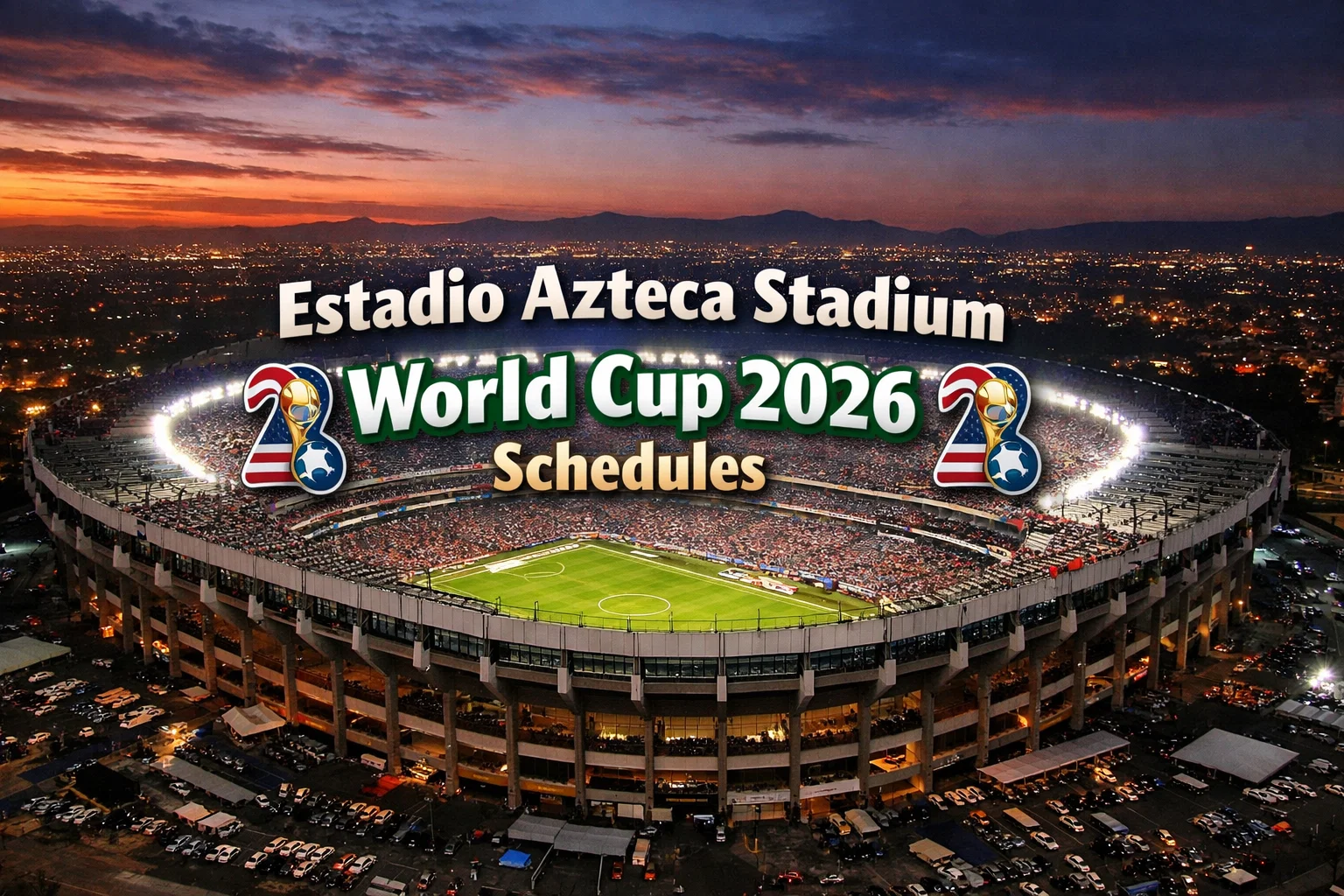
Estadio Azteca Stadium World Cup 2026 – Schedules, Capacity, History & Travel Guide
The FIFA World Cup 2026 will bring football fans from all over the world to North America, and one stadium stands above the rest in history and importance, Estadio Azteca. This legendary venue is not just another host stadium. It is a symbol of football history, famous moments, and unforgettable matches that continue to inspire fans across generations.
In 2026, Estadio Azteca will once again take the global spotlight. It is expected to host the opening ceremony and opening match, making it one of the most important venues in the entire tournament. It will also become the first stadium ever to host matches in three different men’s World Cups, which makes it truly unique and adds even more value to the experience of visiting it.
Estadio Azteca in FIFA World Cup 2026
The FIFA World Cup 2026 will feature 48 teams, making it the largest tournament in history. Because of this expansion, stadiums like Estadio Azteca will play an even bigger role in hosting large crowds and delivering high quality match experiences.
For official FIFA use, the stadium may be called “Mexico City Stadium.” However, fans across the world still recognize and respect the name Estadio Azteca. The identity, atmosphere, and history remain the same, no matter what name appears on official schedules.
The Opening Match
The opening match is scheduled for June 11, 2026, and Mexico is expected to play. Opening matches are always special because they set the tone for the entire tournament and bring global attention to the host country.
Mexico City will be full of energy during this time. Fans will arrive days early, and the city will feel like a continuous celebration. The atmosphere inside the stadium is expected to be loud, colorful, and emotional, with strong support from local fans.
How Many Matches Will Be Played Here
Estadio Azteca is expected to host five matches in total. These include group stage games as well as important knockout matches.
This means the stadium will stay active for several weeks. In the early stages, the mood will be more relaxed and hopeful. As knockout matches begin, the pressure and excitement will increase, creating a completely different atmosphere.
World Cup 2026 Schedule at Estadio Azteca
The stadium will host matches across different stages of the tournament, making it one of the most important venues throughout the competition.
Match Schedule Overview
| Date | Stage | Details |
|---|---|---|
| June 11 | Opening Match | Mexico’s first game |
| June 17 | Group Stage | Second round match |
| June 24 | Group Stage | Third group match |
| July 1 | Round of 32 | Knockout begins |
| July 5 | Round of 16 | Elimination stage |
These dates show that the stadium will remain busy throughout the tournament. The area around the stadium will likely stay active with fans, street activities, and celebrations.
What May Still Change
Even though dates are planned, some details may still change. Match times, teams, and final logistics are usually confirmed closer to the tournament.
Because of this, it is smart to stay flexible when booking flights and hotels. Keeping track of official announcements will help you avoid confusion and last minute problems.
Capacity and Stadium Details
Estadio Azteca is one of the largest stadiums in the world. Its size is one of the main reasons it creates such a powerful and unforgettable atmosphere.
Seating Capacity
| Type | Capacity |
|---|---|
| Current Capacity | Around 83,000 |
| Expected Capacity 2026 | 85,000 to 90,000 |
The final number may change after renovations. However, it will remain one of the biggest stadiums in the tournament and one of the loudest as well.
Seating Experience
The stadium has a tiered design that offers different viewing experiences for fans.
Lower seating areas bring you closer to the players and the action on the field. Upper tiers provide a wider view of the match and allow you to see team movement and overall gameplay more clearly. Premium sections offer additional comfort and services for fans who want a more relaxed experience.
Because of its size, fans should expect large crowds, busy entry points, and strong crowd energy throughout the match.
Key Stadium Features
The stadium includes a standard football pitch size of 105 meters by 68 meters. It uses natural grass with hybrid support to maintain quality throughout the tournament. Accessibility features such as ramps and elevators are available for fans with different needs. Transport connections include metro lines and light rail access, which help manage large crowds efficiently.
History of Estadio Azteca
Estadio Azteca is more than a stadium. It is one of the most important locations in football history and has witnessed some of the greatest moments in the sport.
The 1970 World Cup Final
The stadium hosted the 1970 final, where Brazil defeated Italy. This match is remembered for Pelé and his outstanding performance, which helped define an era of football.
This moment helped establish the stadium as a global symbol of football excellence.
The 1986 World Cup and Maradona
In 1986, the stadium again hosted the final. During this tournament, Diego Maradona created two of the most famous moments in football history.
One was the “Hand of God” goal, and the other was the “Goal of the Century.” These moments made the stadium legendary and unforgettable.
A Third World Cup in 2026
Hosting matches in 1970, 1986, and 2026 makes Estadio Azteca unique. No other stadium has hosted matches in three different men’s World Cups. This makes visiting the stadium in 2026 even more special for fans.
Renovations for World Cup 2026
The stadium is currently being upgraded to meet modern standards while keeping its historic identity and character.
What Is Being Improved
Renovations focus on improving seating comfort, crowd movement, and overall facilities. Entry and exit systems are being improved to reduce waiting time. Restrooms and common areas are also being upgraded.
Technology Upgrades
New technology includes improved Wi Fi coverage, digital screens for replays and updates, and better lighting systems. These improvements help fans stay connected and enjoy the match more clearly.
Sustainability Efforts
The stadium is also improving energy use and water systems. These changes help make operations more efficient and environmentally friendly during large events.
Travel Guide for Estadio Azteca
Planning your travel properly is very important because Mexico City is large and busy, especially during major events.
Location
The stadium is located in the southern part of Mexico City, around 15 kilometers from the city center. Travel time can vary depending on traffic and your starting location.
Best Public Transport Route
A common and reliable route is to take Metro Line 2 to Tasqueña and then transfer to the Xochimilco Light Rail. This line stops near the stadium.
This option is usually faster and more predictable than driving during busy matchdays.
Rideshare and Driving
Rideshare services and taxis are available, but traffic can increase significantly during matches. Prices may also rise during peak times.
Planning your return journey before the match ends can save time and reduce stress.
Where to Stay in Mexico City
Mexico City offers many accommodation options for different budgets and preferences.
Best Areas to Stay
Polanco is known for luxury hotels and high end dining. Condesa and Roma are popular for their cafes, nightlife, and relaxed atmosphere. Centro Histórico offers cultural attractions and a traditional city experience.
Booking early is very important because hotels will fill quickly during the World Cup.
Weather and Packing Tips
June and July weather in Mexico City can include warm afternoons and sudden rain.
What to Bring
| Item | Reason |
|---|---|
| Light rain jacket | Sudden showers |
| Comfortable shoes | Long walking distances |
| Power bank | Phone usage |
| Water bottle | Hydration |
| Light clothing | Warm weather |
Altitude and Health Tips
Mexico City is located at a high altitude of around 2,200 meters. This can affect visitors, especially those not used to it.
How to Stay Comfortable
Drink water regularly throughout the day. Walk slowly when climbing stairs. Take short breaks if needed. Arriving a day or two early can help your body adjust.
Matchday Tips
Planning your matchday properly can improve your overall experience.
Important Advice
Arrive at least two hours early to avoid long lines. Follow stadium rules and guidelines. Keep your belongings safe in crowded areas. Traveling with friends can make the experience easier and more enjoyable.
FAQs
What is the expected capacity after renovation
It is expected to be between 85,000 and 90,000 depending on the final setup.
When is the opening match
June 11, 2026, with Mexico expected to play.
How many matches will be played here
Five matches including group stage and knockout rounds.
Why is Estadio Azteca famous
It hosted the 1970 and 1986 finals and witnessed historic moments by Pelé and Maradona.
What is the best way to reach the stadium
Metro and light rail are the most efficient options during matchdays.
Final Thoughts
Estadio Azteca is not just a stadium, it is a symbol of football history and passion. During the FIFA World Cup 2026, it will once again become the center of global attention.
With its rich history, massive capacity, and powerful atmosphere, visiting this stadium will be a once in a lifetime experience. With proper planning, smart travel choices, and early preparation, you can enjoy both the match and the city in the best possible way.