Largest Stadiums for FIFA World Cup 2026 Ranked by Capacity
The FIFA World Cup 2026 will be the biggest World Cup ever, with matches played across the United States, Canada, and Mexico. One of the most important things for fans to understand is stadium capacity. The size of a stadium can affect ticket availability, crowd atmosphere, entry time, and even your overall comfort during the match.
Large stadiums usually offer more tickets, which increases your chances of attending popular matches. Smaller stadiums, on the other hand, may feel louder and more intense but can sell out much faster. If you are planning your trip, knowing which stadiums are bigger can help you choose matches more wisely and avoid last-minute problems.
World Cup 2026 Stadiums Ranked by Capacity
Below is a ranking of all 16 World Cup stadiums based on estimated tournament capacity. These numbers are called “net capacity,” which means they are adjusted for FIFA setups like media areas, safety zones, and operations.
Full Stadium Capacity Table
| Rank | Stadium (Tournament Name) | Location | Country | Capacity |
|---|---|---|---|---|
| 1 | New York New Jersey Stadium | New Jersey | USA | 78,576 |
| 2 | Mexico City Stadium | Mexico City | Mexico | 72,766 |
| 3 | Dallas Stadium | Texas | USA | 70,122 |
| 4 | Los Angeles Stadium | California | USA | 69,650 |
| 5 | San Francisco Bay Area Stadium | California | USA | 69,391 |
| 6 | Houston Stadium | Texas | USA | 68,311 |
| 7 | Kansas City Stadium | Missouri | USA | 67,513 |
| 8 | Atlanta Stadium | Georgia | USA | 67,382 |
| 9 | Philadelphia Stadium | Pennsylvania | USA | 65,827 |
| 10 | Seattle Stadium | Washington | USA | 65,123 |
| 11 | Miami Stadium | Florida | USA | 64,091 |
| 12 | Boston Stadium | Massachusetts | USA | 63,815 |
| 13 | Monterrey Stadium | Nuevo León | Mexico | 50,113 |
| 14 | BC Place Vancouver | Vancouver | Canada | 48,821 |
| 15 | Guadalajara Stadium | Jalisco | Mexico | 44,330 |
| 16 | Toronto Stadium | Toronto | Canada | 44,315 |
This table helps you quickly compare stadium sizes and understand where you may have better chances of getting tickets.
Top 5 Largest Stadiums
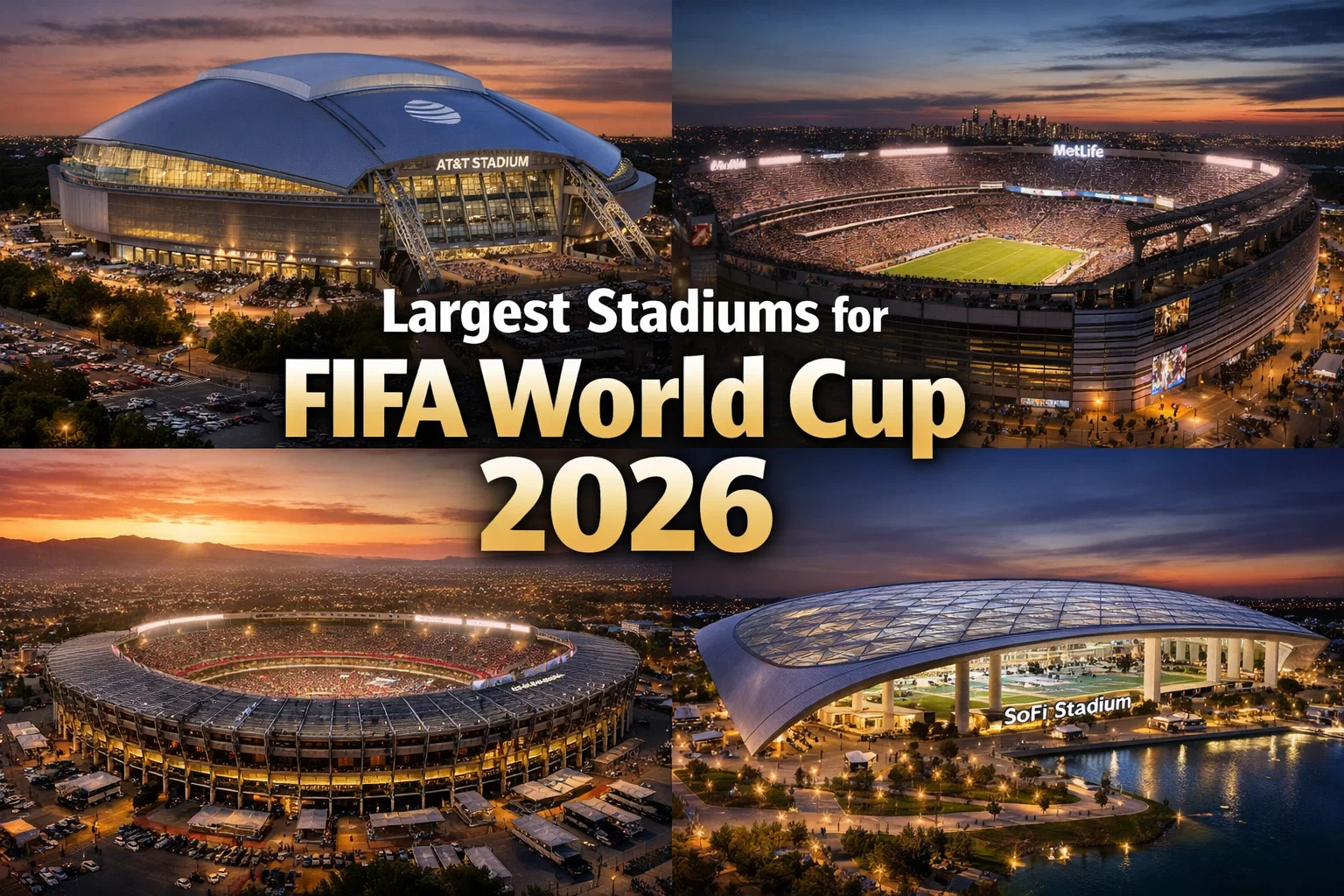
The biggest stadiums in the tournament will likely host the most important matches and attract the largest number of fans from around the world.
Biggest Stadiums Overview
| Rank | Stadium | Capacity | Why It Matters |
|---|---|---|---|
| 1 | New York New Jersey Stadium | 78,576 | Biggest venue, highest demand |
| 2 | Mexico City Stadium | 72,766 | Historic venue, strong atmosphere |
| 3 | Dallas Stadium | 70,122 | Large capacity improves ticket chances |
| 4 | Los Angeles Stadium | 69,650 | Premium event location |
| 5 | San Francisco Bay Area Stadium | 69,391 | Balanced size and demand |
These stadiums are best for fans who want a large-scale experience and slightly better chances of securing tickets.
What Stadium Size Means for Fans
Stadium size does not only affect ticket numbers. It also changes how the match feels inside the stadium.
Large Stadium Experience
Large stadiums feel more open and spacious. They are designed to handle huge crowds and provide more entry gates, food areas, and facilities. This can make movement easier, but sometimes the crowd may feel less intense compared to smaller venues.
These stadiums are ideal if your main goal is to attend a match, especially for popular teams.
Smaller Stadium Experience
Smaller stadiums create a more compact and energetic environment. Fans sit closer together, which makes chants louder and the atmosphere stronger.
However, because there are fewer seats, tickets can be harder to get. These venues are better for fans who want a more emotional and close-to-the-action experience.
Stadiums by Country
The 2026 World Cup is hosted by three countries, each offering a different experience.
Country Comparison Table
| Country | Number of Stadiums | Largest Stadium | Capacity |
|---|---|---|---|
| USA | 11 | New York New Jersey Stadium | 78,576 |
| Mexico | 3 | Mexico City Stadium | 72,766 |
| Canada | 2 | BC Place Vancouver | 48,821 |
The United States has the most stadiums, which gives fans more flexibility in planning travel and match selection.
Best Strategy for Choosing Matches
Choosing the right stadium can improve both your chances of getting tickets and your overall experience.
Smart Planning Tips
A good strategy is to choose at least one match in a large stadium. These venues offer more seats and better chances during ticket sales.
You can also select a second match in a smaller stadium to enjoy a stronger and more intense atmosphere. This combination gives you both comfort and excitement.
Planning early is very important, especially for knockout matches, which are usually in high demand.
Matchday Planning Based on Stadium Size
Different stadium sizes require different planning styles.
Large Stadium Tips
Arrive early because entry lines can be long. Security checks may take time due to large crowds.
Also, be prepared for longer walking distances inside the stadium. Finding your seat, food areas, and exits may take more time.
Smaller Stadium Tips
Smaller stadiums may have shorter walking distances, but they can feel crowded quickly. Entry may be faster, but ticket demand is higher.
Arriving early still helps you avoid stress and enjoy the atmosphere before kickoff.
Atmosphere and Crowd Energy
The feeling inside a stadium can change depending on its size and design.
Large stadiums give a grand and impressive feeling. You can see thousands of fans and feel the scale of the event.
Smaller stadiums feel more intense and emotional. The noise is louder, and fans are closer to the action, which creates a strong connection with the game.
Both experiences are valuable, and many fans try to experience both during the tournament.
Travel and Planning Considerations
Stadium size also affects travel planning. Larger venues are often located in major cities with better transport systems, while smaller venues may require more planning.
Booking hotels early is important, especially near large stadiums where demand will be high. Transport options like trains, buses, and rideshare services may also be crowded on matchdays.
Planning your route in advance can help you avoid delays and enjoy your day more smoothly.
FAQs
Which is the largest stadium in World Cup 2026?
The largest stadium is New York New Jersey Stadium, with a capacity of 78,576. It is expected to host some of the biggest matches of the tournament.
Why do stadium capacities look different online?
Different sources may show different numbers because some use full capacity, while others use tournament (net) capacity. FIFA usually reduces seating for media, safety, and operations.
Which stadium in Canada is the biggest?
BC Place Vancouver is the largest stadium in Canada for the World Cup, with a capacity of 48,821.
Are bigger stadiums easier for getting tickets?
Yes, larger stadiums usually offer more tickets, which can improve your chances. However, very popular matches can still sell out quickly.
Do smaller stadiums have better atmosphere?
Smaller stadiums often feel louder and more intense because fans are closer together. This creates a stronger matchday atmosphere.
Should I choose big or small stadiums?
It is best to choose a mix. Pick one large stadium for better ticket chances and one smaller stadium for a more exciting atmosphere.
Final Thoughts
The FIFA World Cup 2026 will feature some of the largest and most exciting stadiums ever used in football. From huge venues like New York New Jersey Stadium to smaller ones like Toronto Stadium, each offers a unique experience.
Understanding stadium capacity can help you plan smarter, choose better matches, and improve your chances of getting tickets. With the right strategy, you can enjoy both the scale of big stadiums and the energy of smaller ones, making your World Cup experience truly unforgettable.