2026 FIFA World Cup Final Draw: Date, Format, Teams, and What to Expect
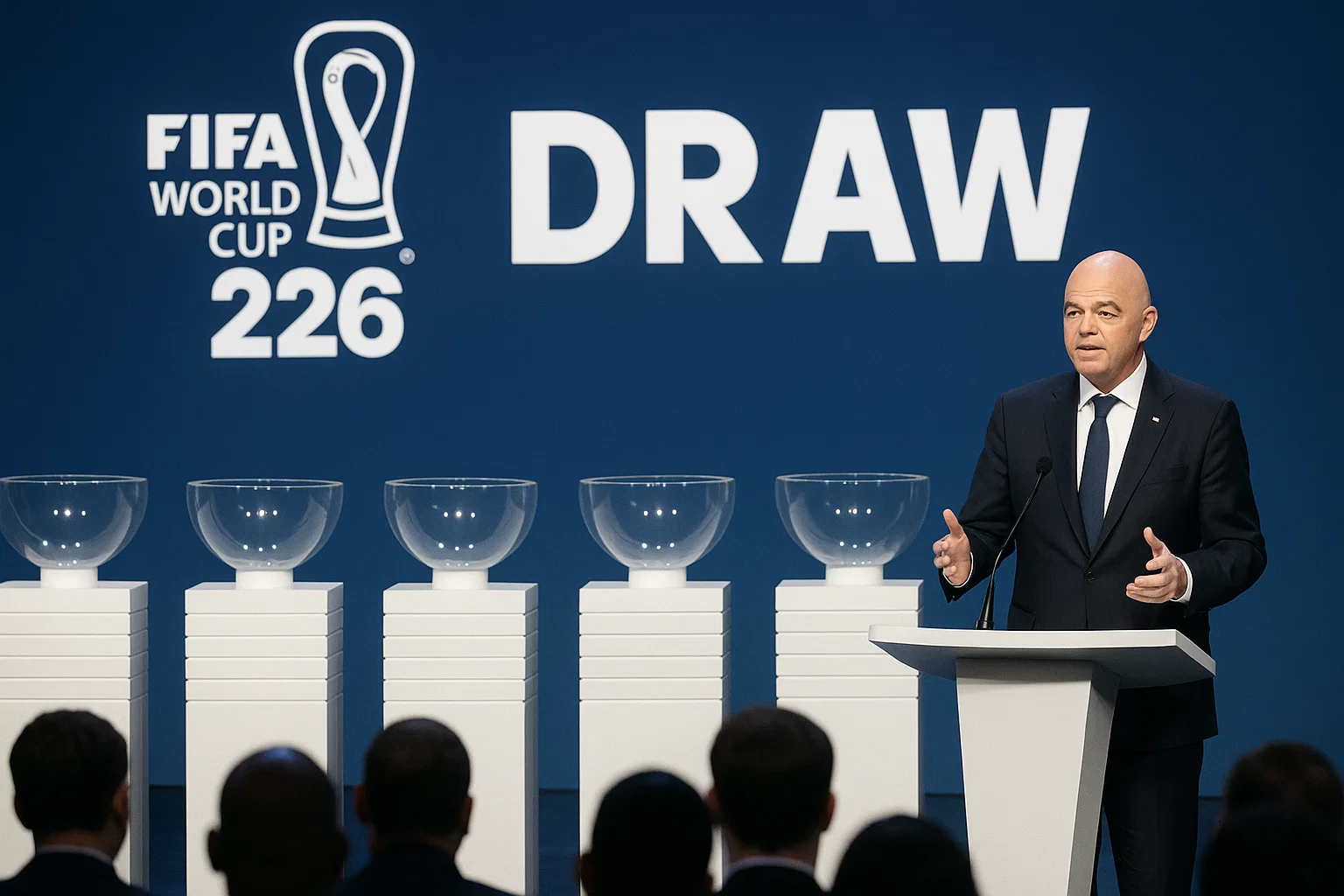
The final draw for the 2026 FIFA World Cup will take place on December 5, 2025 at the John F. Kennedy Center in Washington, D.C. The ceremony begins at 12:00 PM Eastern Time. President Donald Trump and FIFA President Gianni Infantino are expected to attend.
Fans across different regions can plan ahead. Viewers on the U.S. West Coast should tune in at 9:00 AM Pacific Time, while European audiences can watch at 5:00 PM GMT.
Understanding the New Draw Format
The 2026 edition expands to 48 teams, divided into 12 groups of four. Each team plays three group-stage matches before the knockout rounds begin.
Group Advancement Rules
The top two teams from each group advance to the knockout stage. They will be joined by the eight best third-place teams, creating the first Round of 32 in World Cup history.
How the Seeding Pots Work
Teams are placed into four pots according to FIFA rankings. Pot 1 contains the three host countries and the nine highest-ranked qualified teams. Pots 2, 3, and 4 include the remaining teams in descending ranking order.
Host Nation Placement
FIFA has already assigned each host nation to a specific group. Mexico is placed in Group A and will play the opening match on June 11. Canada is set for Group B, and the United States is assigned to Group D.
Separation of the Top Four Teams
A new rule ensures the four highest-ranked teams are kept apart in the knockout bracket. Spain and Argentina are placed at opposite ends. France and England are also separated. These four teams cannot meet until the semifinals if they all win their groups.
Key Draw Rules
Pots: Four pots of 12 teams each, based on FIFA rankings Confederation Limits: Groups may contain up to two UEFA teams; all other confederations are limited to one team per group Group Structure: Twelve groups of four Top Seed Separation: The top four ranked teams are kept on different sides of the bracket
Qualified Teams So Far
Forty-two of the 48 available spots have been filled. The remaining six will be decided by March 2026.
Host Nations
United States, Canada, Mexico
Asia (8 teams)
Japan, Iran, South Korea, Australia, Qatar, Saudi Arabia, Uzbekistan, Jordan
Africa (9 teams)
Morocco, Senegal, Egypt, Algeria, Tunisia, Côte d’Ivoire, South Africa, Cape Verde, Ghana
South America (6 teams)
Argentina, Brazil, Colombia, Uruguay, Ecuador, Paraguay
Oceania (1 team)
New Zealand
Europe (12 of 16 teams)
Spain, France, England, Portugal, Netherlands, Belgium, Germany, Croatia, Switzerland, Austria, Scotland, Norway
North and Central America (3 teams)
Panama, Curaçao, Haiti
Curaçao becomes the smallest nation ever to qualify, with just 156,000 people. Haiti returns for the first time in 52 years. Cape Verde, Jordan, and Uzbekistan qualify for their first World Cups.
Seeding Pots Based on FIFA Rankings
Pot 1
United States, Canada, Mexico, Spain, Argentina, France, England, Brazil, Portugal, Netherlands, Belgium, Germany
Pot 2
Croatia, Morocco, Colombia, Uruguay, Switzerland, Japan, Senegal, Iran, South Korea, Ecuador, Austria, Australia
Pot 3
Norway, Panama, Egypt, Algeria, Scotland, Paraguay, Tunisia, Côte d’Ivoire, Uzbekistan, Qatar, Saudi Arabia, South Africa
Pot 4
Jordan, Cape Verde, Ghana, Curaçao, Haiti, New Zealand, plus four European playoff winners and two intercontinental playoff winners
Remaining Playoff Spots in March 2026
Six spots are still open and will be filled by the European and intercontinental playoffs.
European Playoffs
Sixteen teams compete for four places, including Italy, Wales, Ukraine, Poland, Turkey, Slovakia, Denmark, and Czechia. All matches conclude by March 31, 2026.
Intercontinental Playoffs
The final two places are decided in Mexico. New Caledonia faces Jamaica and Bolivia meets Suriname in the semifinals. DR Congo and Iraq enter the final round as top seeds.
Draw Day Rules and Procedures
Teams from the same confederation cannot be drawn into the same group, except for UEFA, which has enough teams to allow up to two per group. Each group will include one team from each pot.
What Happens on December 5
The draw ceremony will reveal all 12 groups and each team’s three group-stage opponents. It will also finalize the entire knockout bracket, showing each nation’s potential path to the final.
On December 6, FIFA will release the complete match schedule, including stadium assignments and kickoff times, allowing fans to plan travel and tickets.
How to Watch the Draw
The event will stream globally on FIFA.com and FIFA’s YouTube channel. In the United States, FOX Sports, Peacock, Telemundo, and Universo will carry the broadcast. Canada will air it on TSN, and the United Kingdom will show the ceremony on BBC and BBC iPlayer.
Coverage begins at 10:00 AM Eastern Time with analysis and predictions.
Frequently Asked Questions
What time does the draw start?
The draw begins at 12:00 PM ET on December 5, 2025. West Coast viewers should tune in at 9:00 AM PT. European fans can watch at 5:00 PM GMT.
How many teams have qualified so far?
Forty-two teams have qualified. The final six places will be filled by March 31, 2026.
Can teams from the same continent meet in the group stage?
Only UEFA teams can share a group. All other confederations are limited to one team per group.
Where will the final be held?
The 2026 World Cup final will be played at MetLife Stadium in New Jersey on July 19, 2026.
What makes the 2026 World Cup different?
The tournament expands to 48 teams, introduces a Round of 32, and is hosted by three nations for the first time. The top four seeds are also separated until the semifinals.
When will all 48 teams be known?
All qualifiers will be decided by March 31, 2026.
Who are the early favorites?
Spain leads the FIFA rankings. Argentina, France, England, and Brazil are also considered major contenders.
How does the new bracket system work?
Spain and Argentina are placed on opposite ends of the knockout bracket. France and England are also separated. These teams can only meet in the semifinals if they win their groups.
The December 5 draw will set the stage for the largest World Cup in history, revealing all group matchups and outlining the road to the final for all 48 competing nations.